

Atosa Refrigerator · El Cajon
Atosa Refrigerator Repair in El Cajon
Independent Atosa refrigerator repair in El Cajon, CA, all models, in your home.
Or book online and we'll get back to you to set a visit window.
Schedule Your Repair
Four quick steps. We'll confirm a visit window with you, and you'll get a written estimate before any work starts.
Service Type
What type of service do you need?
Or call us directly:
(619) 984-2545Repair Service Shaped Around San Diego Homes
Atosa refrigerators have their own weak points, and knowing them shortens the diagnosis. That's what a repair visit in El Cajon starts with. In mobile homes, appliances are often fitted into tight spaces, so mention the home type when you book and we'll plan for it. We're an independent repair company: you see a written estimate first, and finished repairs carry a 90-day parts and 30-day labor warranty.
How It Works
Related Services
San Diego County
Ready to schedule your repair?
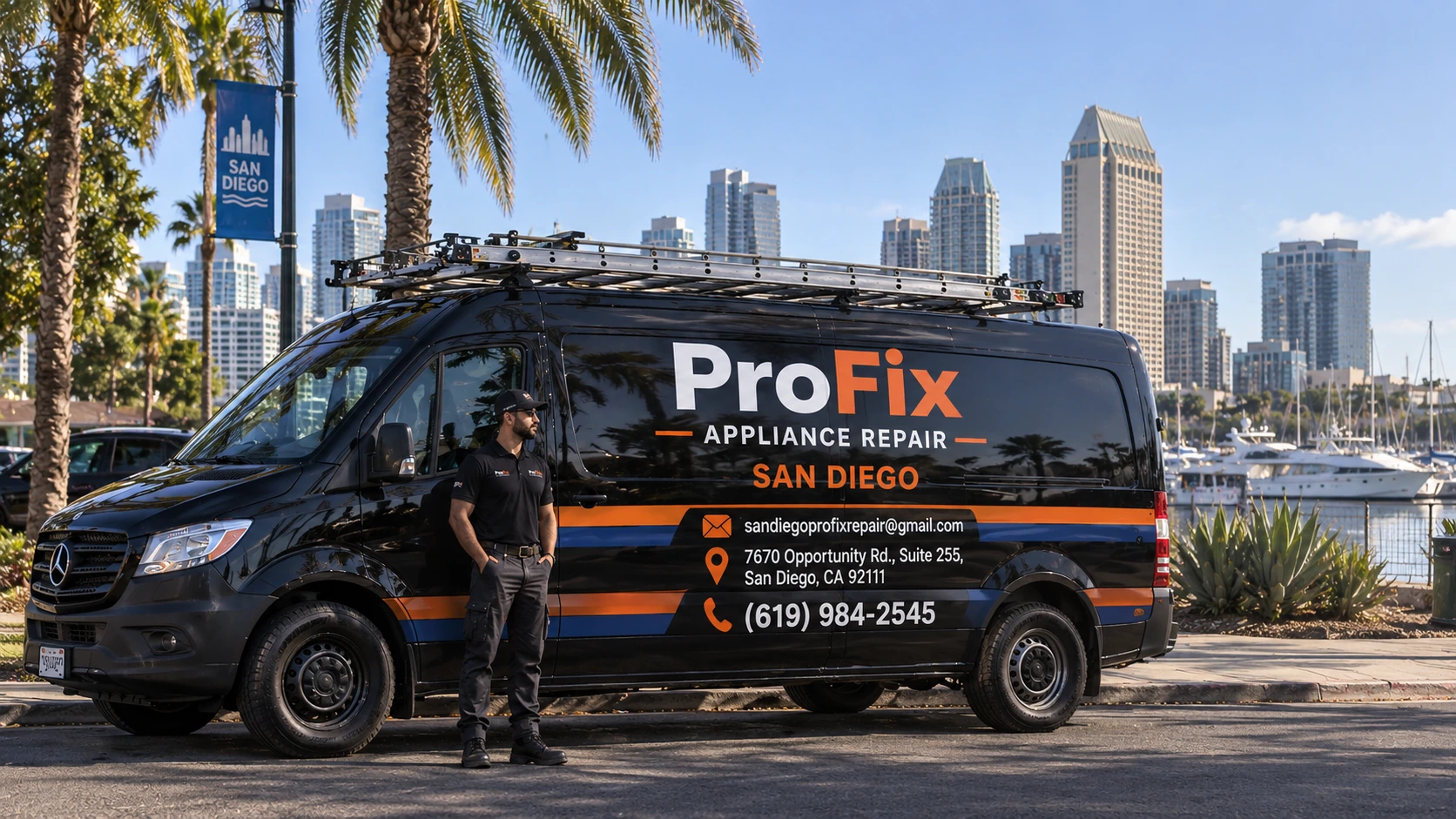
San Diego ProFix Appliance Repair: independent, in-home appliance repair with a written estimate before any work starts.
What El Cajon does to a refrigerator
Summer afternoons in El Cajon regularly reach the 90s, and a garage gets hotter still. A refrigerator rated for normal room temperatures can run nonstop out there and still lose ground, so where the unit sits is one of the first things we ask about.
Problems worth ruling out first on a refrigerator in El Cajon:
- Not Cooling
- Compressor Failure
- Not Staying Cold
- Runs Constantly / Never Cycles Off
- Bottom Drawer Not Cooling
- Refrigerator Gradually Warming Up
Known weak spots on Atosa refrigerators
- Reach-in warm
- Prep rail not holding temperature
- Condenser fan noise
- Door gasket torn
Atosa reach-ins and prep tables pull air across condenser coils that collect kitchen grease and flour, so a dirty coil is the usual reason a cabinet warms during service. Prep-table rails warm first when the condenser struggles. Temperature controllers can drift or fail, but are checked after airflow.
Read the full Atosa refrigerator repair guide, with common questions →
Other refrigerator brands we repair in El Cajon